June 24, 2026
Theater Talk Buffalo
A new Dr Watson in the shadows of Boston
Read More


We're deep into Season 47 — Becky Shaw is on stage now through October 3, and The Haunting of Hooverton Hotel opens October 24.
A Christmas Carol returns for the holidays this December, with The Hateful Elf, The Rink at the End of the World, and The Frogs still ahead as the season continues.
If you're from out of town, haven't been to see a show here in a while, never got off the couch since lockdown ended, or if you're one of our loyal subscribers... I know you're going to love this show and our season.
Stop me and say hi when you're in the lobby! I'd love to meet you.

Chris J Handley
Executive Artistic Director

Medium.com
A distinctly American play built upon one of Britain’s most famous literary foundations.
There are some fictional characters we never really meet for the first time.
By the time I saw His Girl Watson: A Sherlock Noir, by Kevin Cirone at Alleyway Theatre, I had already spent decades with Sherlock Holmes.
I met him through Basil Rathbone films on late-night television. As a kid, I would stay up far later than I should have, watching old Sherlock Holmes movies whenever they appeared on television. I wasn’t entirely sure whether I had a crush on Basil Rathbone or Sherlock Holmes himself. Either way, I was captivated.
Then my mother bought me a used copy of The Hound of the Baskervilles by Sir Arthur Conan Doyle.
I devoured it.
I still remember reading the novel while carrying images from the film version in my head and discovering that the book contained details the movie had left behind. It was one of my first lessons in adaptation. Stories change. Characters evolve. New artists bring new perspectives.
But some characters remain stubbornly alive in our imaginations.
Which raises a difficult question for every actor who portrays Sherlock Holmes:
How do you play a character the audience already knows?
Not knows from this production.
Knows from a lifetime.
Because when an actor fully inhabits a beloved character, we stop seeing the actor and begin believing in the character. When that doesn’t happen, we become aware of the performance itself. We start noticing choices. We start comparing. We start drifting.
That question stayed with me throughout Alleyway Theatre’s world premiere production of His Girl Watson, winner of the 2025 Maxim Mazumdar New Play Award and directed by Robyn Lee.
The challenge facing Gregory Gjurich as Sherlock Holmes is enormous. Holmes belongs to all of us who grew up with him. Every audience member arrives carrying their own version of the detective.
For me, there were moments when I struggled to separate the actor from the character I have loved since childhood.
Oddly enough, that realization became one of the most interesting parts of the evening.
I remember the first time I saw Basil Rathbone playing the Sheriff of Nottingham in The Adventures of Robin Hood. I was appalled. Sherlock Holmes was not supposed to be the villain. Yet Rathbone’s performance was so effective that I eventually loved him in both roles.
The lesson stayed with me.
Great performances allow us to believe.
Theater itself depends upon that belief.
Playwrights, directors, actors, designers, and technicians all participate in the same impossible task: convincing an audience to forget what they know and surrender to a story they know is fiction.
His Girl Watson succeeds because it understands that Sherlock Holmes is not actually the center of this story.
Watson is.
More specifically, this Watson.
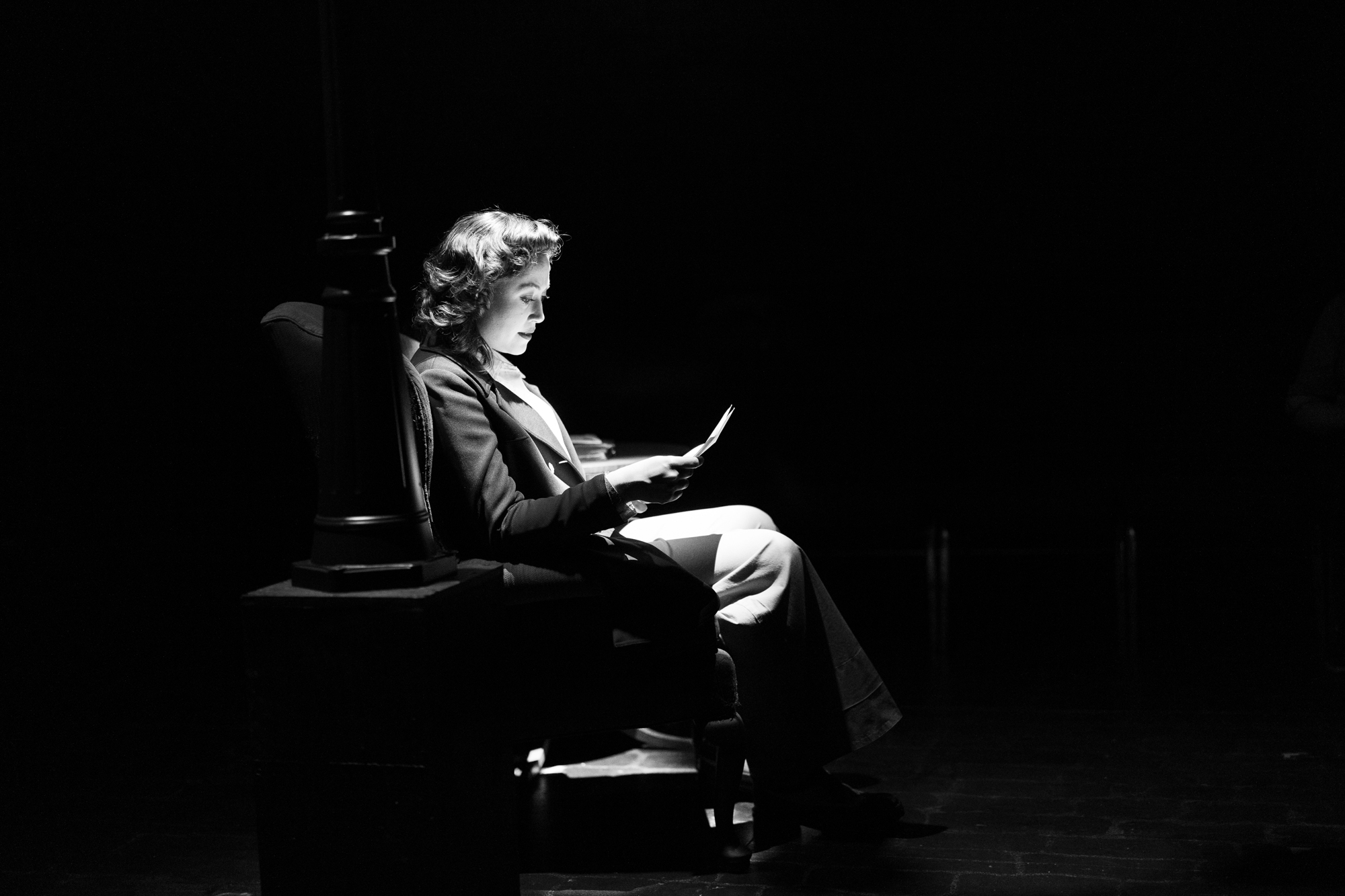
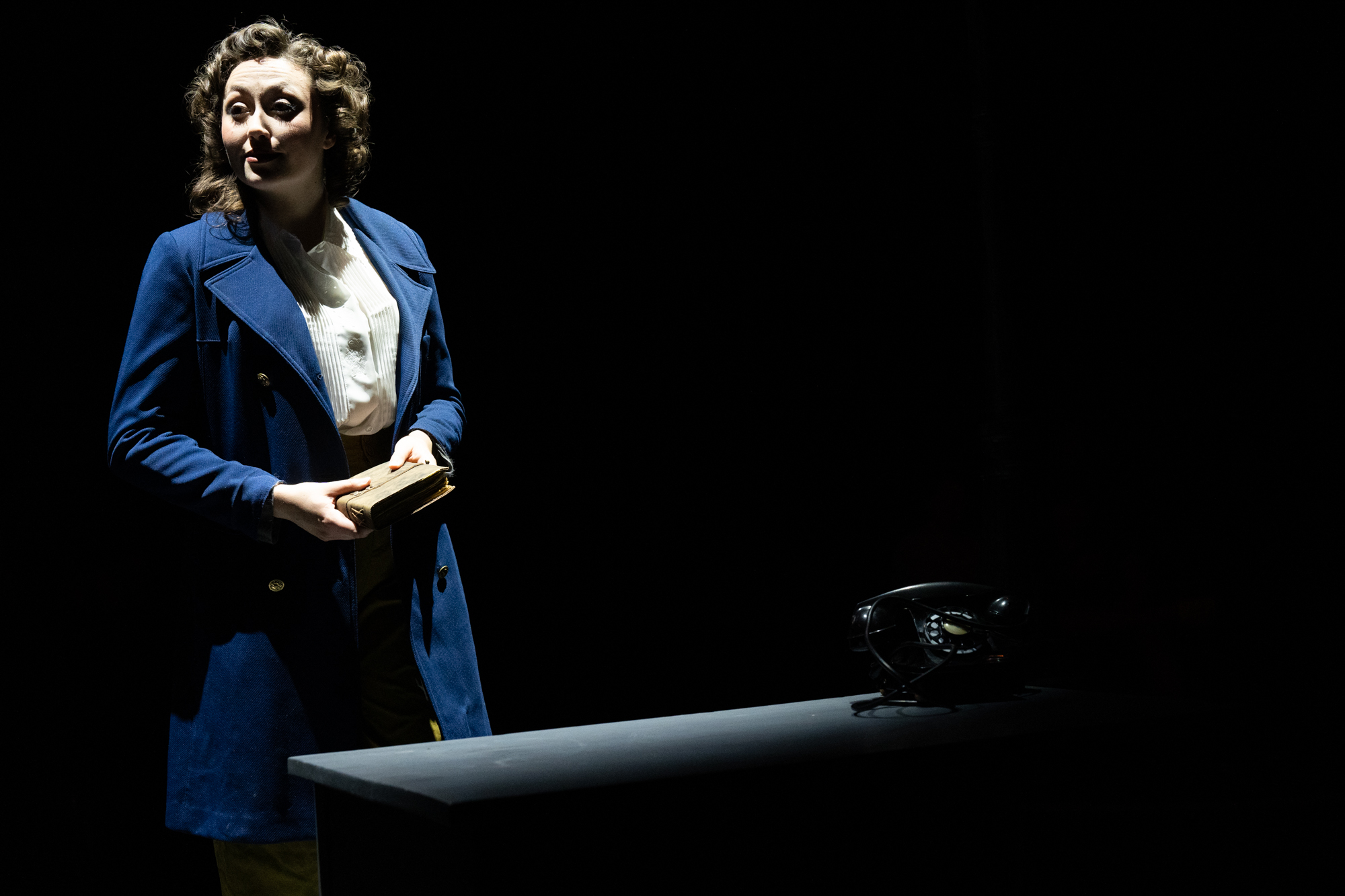
The playwright reimagines Dr. Watson as an accomplished, independent American woman physician, creating a story that feels both faithful to Conan Doyle’s world and entirely its own creation.
The result is a distinctly American play built upon one of Britain’s most famous literary foundations.
The mysteries at its center are engaging and cleverly constructed, but what interested me most was the mystery beneath the mystery. Without revealing spoilers, the play explores family secrets, identity, women’s autonomy, self-defense, and the ways our past continues to shape our present. The central revelation is deeply human, timeless, and recognizable.
It gives the play emotional stakes beyond the mechanics of solving a crime.
That emotional core is carried beautifully by Anna Fernandez.
Fernandez possesses the kind of stage presence that makes audiences lean forward. She could probably perform the unfurling of a blade of grass and somehow leave me laughing, crying, or both. Her command of character, dialect, and emotional nuance anchors the production and provides the audience with a Watson worth following.
Josh Wilde and Jacob Albarella demonstrate remarkable versatility throughout the evening. Both actors shift between characters with an ease that reveals significant technical skill. Their work is never simply about changing voices or costumes. Their bodies, faces, timing, and physical choices create fully realized people rather than theatrical sketches.
Sara Kow-Falcone continues to remind Buffalo audiences just how much talent she possesses. Intelligence, emotional depth, strong vocal work, and commanding stage presence combine into a performer I wish we saw more often. Every appearance feels purposeful.
Lex Cueva, a newcomer to me, handles multiple roles with confidence and clarity. Their work remains grounded and believable regardless of the demands placed upon them.
And Gregory Gjurich remains one of Western New York theater’s most recognizable and reliable performers. His comic instincts are well known, but here he also shoulders the difficult responsibility of portraying one of fiction’s most enduring characters.
The production’s physical storytelling is equally impressive.
Fight director Danielle Rosvally stages action sequences that are both exciting and believable within Alleyway’s intimate space. A fight aboard a moving elevated train becomes one of the evening’s most entertaining theatrical moments.
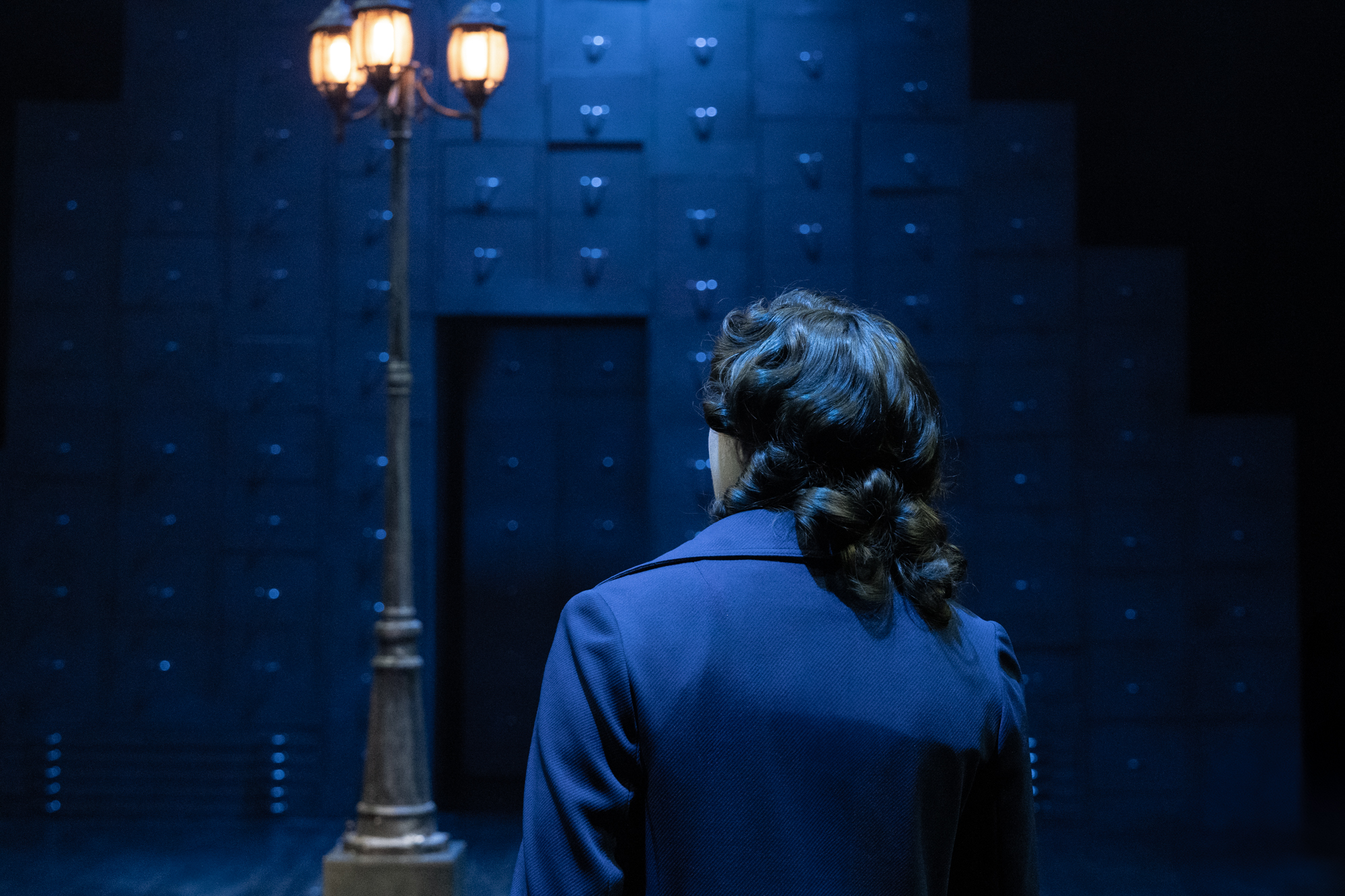
Jonas Harrison’s scenic design creates a world that feels simultaneously practical and imaginative. Cobblestone streets, looming file cabinets, and unexpected visual reveals give the production an atmosphere that supports both mystery and adventure.
The technical design is particularly strong.
Emma Schimminger’s lighting and sound work functions almost as another character within the play. The fog-shrouded evenings, carefully sculpted specials, and shifting moods create an environment that evokes Victorian London while remaining uniquely theatrical. Schimminger understands how light directs attention, creates atmosphere, and shapes emotional response. The design never overwhelms the actors, but consistently supports them.
Costume designer Amaya Mack continues to grow as an artist. As someone who has worked with her before — and as a former costume worker myself — I was pleased to see the confidence and maturity evident in her designs. The costumes support both character and storytelling while helping establish the production’s world.
Director Robyn Lee ultimately brings all of these elements together into a fluid and entertaining production.
One thing I often notice when watching work directed by women is how perspective shifts. Here we are watching a script written by a man, built upon characters created by a man, yet filtered through the artistic lens of a woman director.
This matters to theatrical storytelling, arts practices, and modern life.
Because despite the title character standing at the center of popular imagination, this is not really Sherlock Holmes’ story.
It is Watson’s story.
The production understands that from beginning to end.
When I was a child watching Basil Rathbone films, I wasn’t thinking about acting, not really. I wasn’t analyzing performances or comparing interpretations, not directly. I simply believed.
Years later, I understand how difficult that illusion is to create.
Actors and directors inherit characters that already live in our imaginations. Audiences arrive carrying memories, expectations, and personal histories. We bring decades of Sherlock Holmes with us into the theater.
His Girl Watson doesn’t try to replace the Sherlock Holmes we already know.
Instead, it asks us to look somewhere else.
To look at Watson.
To see a familiar world through different eyes. Through a woman’s eyes and even though the stories of Sherlock Holmes and this current story of Dr. Watson were both written by men, we are reminded that human stories do not happen in gender silos.
Human stories reflect lives lived, and questions answered, and choices made, and the results of those choices. Stories written by us reflect all that we have seen and lived through and lived with, those experiences often involve collaborative events between the genders. And its important to remember that perspectives can change how these stories are viewed.
And in doing so, it reminds us why great fictional characters survive generation after generation: not because they remain unchanged, but because artists continue finding new ways to tell their stories.